Français
Retro Record Turntables Sell Better With Consistent Styling
Créé le 03.16
Music lovers cherish the unique look of analog audio. At our shop, a vintage record player brings a nostalgic charm to any room. People feel a deep connection with the classic design of these devices.
What really gets our customers excited is when everything looks the same. This uniformity shows quality, something today's buyers look for in their homes.
retro record turntable
When a retro record turntable looks like it's all one piece, it builds trust. Customers feel they're getting a premium product that fits their decor. We want to show you how these details enhance your collection.
Let's dive into why matching design elements are key for success. We'll see how real features boost appeal. Our aim is to help you find the most attractive gear out there.
Key Takeaways
- Visual harmony significantly boosts customer confidence and purchase intent.
- Uniform materials ensure the device looks like a high-end centerpiece.
- Buyers prefer authentic colors that match the era of the music.
- The value of a device increases when all components share a theme.
- Consistent styling helps products stand out in a crowded market.
- Mismatched parts can lower the perceived value of analog equipment.
Why Design Consistency Defines a Quality Retro Record Turntable
Design consistency is key to a top-notch retro record turntable. It affects both the product's look and how much buyers trust it. When all parts of a turntable match well, it looks great and wins over customers.
Design consistency covers several important areas. Let's dive into each one.
The Psychology Behind Cohesive Vintage Aesthetics
Vintage looks in retro record turntables connect with people's love for old designs. A turntable that looks like it's from another time can make people feel something special. This feeling can really influence if someone decides to buy it.
For example, a turntable with a wooden body and old-style knobs can make you feel like you're back in the vinyl days. The debate between modern and vintage turntables shows how much people love the real vintage look in today's products.
A vintage-inspired, high-quality retro turntable is prominently displayed in the foreground, showcasing its glossy wooden finish and brushed metal accents. The turntable features a sleek, curved design with classic dials and a large, spinning vinyl record that captures the light. In the middle ground, a cozy living room setting includes stylish mid-century furniture, creating a nostalgic atmosphere. Soft, warm lighting highlights the turntable, casting gentle shadows that enhance its design details. The background showcases a subtle, blurred bookshelf filled with vinyl records, emphasizing the connection to classic music culture. The overall mood is inviting and refined, evoking a sense of nostalgia and appreciation for well-crafted design. The scene is composed with a shallow depth of field, capturing the elegance and timeless quality of the retro turntable.
How Mismatched Components Undermine Authenticity
When a turntable's parts don't match, it can make it seem fake. If different parts look different, it might seem like the product was put together without care. This can make buyers doubt the quality of the product.
For instance, a turntable with a nice wooden cabinet but modern controls might not feel right to those who want a true retro feel. It's important for all parts to match in design and materials to keep the vintage vibe.
Building Trust Through Visual Harmony
Visual harmony is key to winning over buyers. A turntable that looks like it's all one piece is seen as well-made and high-quality. This isn't just about looks; it's about making buyers feel sure the product was made with care.
By making sure all parts of the turntable, from the cabinet to the controls, match, makers can create a product that looks good and feels real and trustworthy.
Core Design Elements That Create Authentic Retro Styling
Creating retro record turntables requires careful attention to several design elements. These elements blend materials, aesthetics, and details to bring back the charm of old times.
Wood Finishes and Cabinet Construction
The cabinet of a retro record turntable is its standout feature. The wood finish is key to its look. We'll look at matching wood grain and keeping stain and varnish consistent.
Matching Wood Grain Across All Surfaces
Having a consistent wood grain pattern is crucial. It means choosing wood veneers or solid wood carefully. This ensures the grain flows smoothly across all surfaces.
Consistent Stain Colors and Varnish Levels
The stain color and varnish level greatly affect the wood's look. A uniform finish enhances the retro vibe. Different varnish levels add depth and character.
Wood Finish | Description | Retro Appeal |
Oak | A classic choice with a prominent grain | High |
Walnut | Rich, dark color with a smooth finish | Very High |
Mahogany | Warm, reddish tone with a fine grain | High |
Metal Hardware and Component Finishes
Metal hardware and finishes are key to the retro look. Brushed aluminum and chrome accents, along with tone arm and hinge finishes, are important.
Brushed Aluminum Versus Chrome Accents
Brushed aluminum offers a subtle, vintage look. Chrome accents provide a bold, shiny appearance. The choice depends on the desired retro style.
Tone Arm and Hinge Coordination
It's important that the tone arm and hinges match the other metal components. This coordination keeps the turntable looking authentic and appealing.
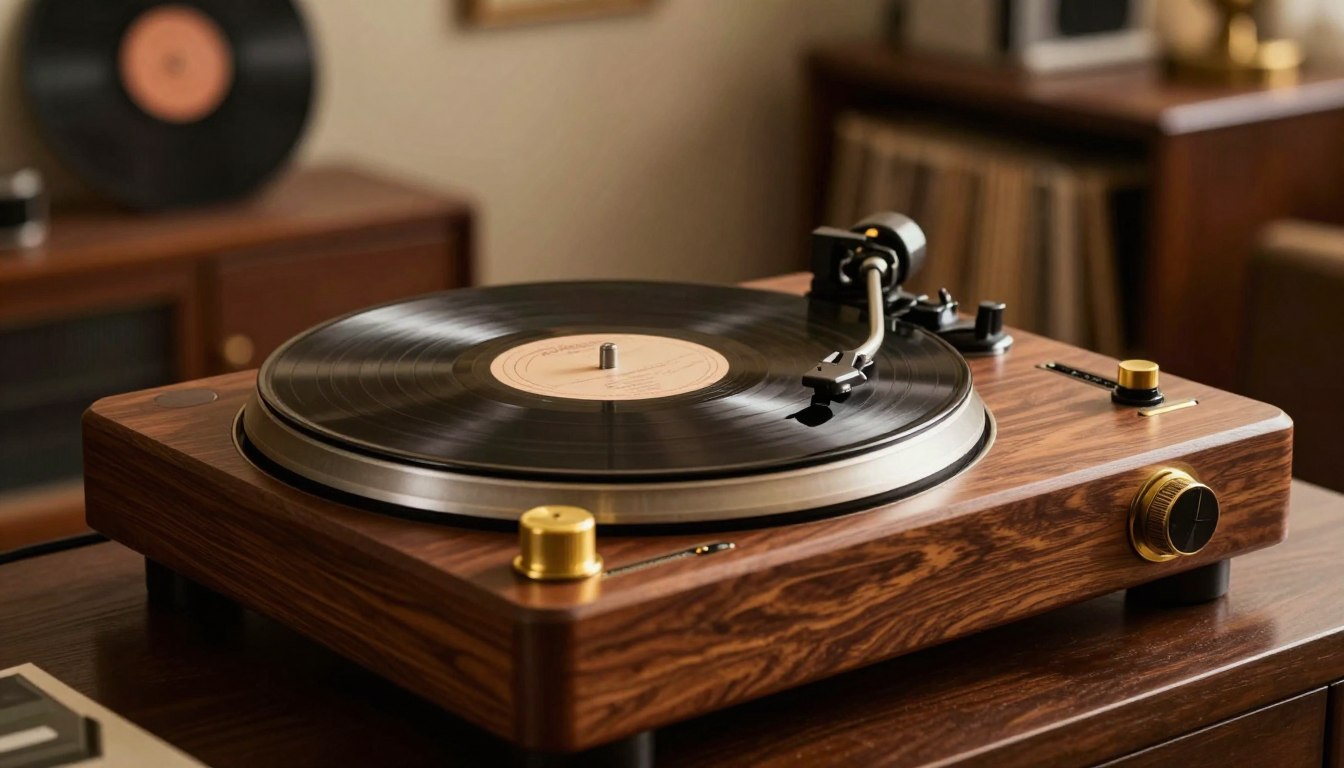
A beautifully designed retro turntable, prominently displayed in the foreground, featuring rich wood grain, brass accents, and a smooth vinyl platter. The turntable is elegantly detailed with vintage knobs and a classic tonearm, capturing the essence of mid-20th century design. In the middle ground, soft, warm lighting casts gentle shadows, highlighting the craftsmanship of the turntable. The background is softly blurred, hinting at a cozy, stylish living room environment with antique furniture and vinyl records casually stacked on a shelf. The overall mood is nostalgic and inviting, evoking a sense of authenticity in retro styling. Shot from a low angle to emphasize the turntable's features, creating a dramatic yet warm atmosphere.
Knobs, Buttons, and Control Aesthetics
The design of knobs, buttons, and controls is often overlooked but crucial. Using era-specific switch styles and typography is key to the retro look.
Period-Appropriate Switch Styles
Switch styles from the retro era enhance the turntable's authenticity. This includes toggle switches, rotary dials, and other vintage controls.
Typography and Label Design
The typography and label design should also reflect the era. This includes the font style, size, and color, as well as the layout and information on the labels.
Color Palettes and Materials That Drive Customer Interest
When making a vintage record player, picking the right colors and materials is key. The right mix can bring back memories and make the product more attractive to buyers.
The color palette is crucial for a retro record turntable. Warm wood tones like oak and walnut are popular. They bring a sense of warmth and coziness.
Warm Wood Tones Versus Bold Color Statements
Warm wood tones are a favorite for retro record turntables. They add elegance and sophistication.
Bold colors like red and blue can make a turntable stand out. Vibrant colors add fun and playfulness to the design.
Color Palette | Description | Effect on Customer Interest |
Warm Wood Tones | Classic, elegant, and sophisticated | Evokes nostalgia and authenticity |
Bold Color Statements | Fun, playful, and attention-grabbing | Creates a modern twist on vintage design |
Leather Accents and Textured Surfaces
Materials used in a retro record turntable also matter. Leather accents add luxury and sophistication.
Textured surfaces, like those on vintage amplifiers, enhance the retro look. They add depth and interest to the design.
Speaker Grille Fabrics That Complete the Look
The speaker grille fabric is key to a retro record turntable's design. The right fabric completes the vintage look.
Manufacturers can pick from cotton, wool, and synthetic materials. The goal is to find a fabric that fits the product's aesthetic.
When Modern Materials Work With Vintage Design
Modern materials can also work with vintage design. Modern materials like aluminum and acrylic add sophistication and elegance.
The trick is to mix modern materials with vintage elements for a cohesive look.
How Consistent Styling Translates to Better Sales Performance
Consistent styling has a big impact on sales. It makes retro record turntables look better and more appealing. This boosts their marketability.
When a turntable looks good all the way through, it stands out. This makes it more attractive to buyers. This can lead to more sales.
Product Photography and First Impressions
Good photos are key to showing off a turntable's design. The first look at a product image can sway a buyer's choice.
Images that are clear and show the turntable from different sides are best. They highlight its design and make it more appealing.
Meeting Buyer Expectations for Period Accuracy
Buyers of retro turntables have certain design and era expectations. Meeting these expectations builds trust and drives sales.
A turntable that looks like it's from its era can cost more. It also attracts more serious buyers.
Price Positioning and Perceived Craftsmanship
The price of a turntable is tied to its craftsmanship and design. A well-made turntable with consistent styling can cost more.
Design Element | Impact on Price Positioning | Perceived Craftsmanship |
Wood Finishes | Justifies premium pricing | High-quality materials and finish |
Metal Hardware | Enhances perceived value | Durable and precisely crafted |
Knobs and Buttons | Contributes to overall aesthetic appeal | Attention to detail in design and functionality |
Customer Reviews Emphasizing Design Cohesion
Customer reviews are very important. Praise for a turntable's design cohesion can make it more appealing.
Good reviews on design consistency can increase perceived value. This can lead to more sales.
Conclusion
Consistent styling is key to the success of retro record turntables. By using core design elements, manufacturers can create turntables that appeal to customers' nostalgia. These turntables meet quality and aesthetic expectations.
A retro record turntable with vintage looks can stir strong emotions in buyers. Choosing the right colors and materials is crucial. A well-designed turntable builds trust and makes it seem like a premium product.
When designing and marketing retro record turntables, focus on consistent styling. This approach creates an authentic and engaging product. It drives sales and meets the needs of customers seeking a true vintage listening experience.
FAQ
Why does design consistency matter so much for retro record turntables?
Design consistency is key to authenticity. It creates a sense of quality and trust. Whether it's a Victrola or custom, matching styles show quality and detail.
Which core design elements are most important for achieving an authentic vintage look?
For a true vintage look, focus on wood finishes, cabinet construction, and metal hardware. Matching wood grain and stain colors is crucial. Even small details like hinge coordination and metal accents matter a lot.
How do mismatched components affect the sales performance of a turntable?
Mismatched parts can lower buyer confidence. If the knobs and labels don't match the era, it breaks the vintage charm. This can lead to lower prices and bad reviews from enthusiasts.
What role do color palettes and materials play in driving customer interest?
The right colors can make a sale. Warm woods are classic, while bold colors attract modern tastes. Materials like leather and specific fabrics add to the retro look. Modern materials must fit the vintage style.
How can we better showcase the design cohesion of our record players to potential buyers?
Invest in professional product photography. Show the unit's design harmony, from the tone arm to controls. Online first impressions are crucial. High-quality images justify the cost and meet enthusiast expectations.
Contact
Leave your information and we will contact you.