Italiano
How to Write a Record Player RFQ That Gets Faster Quotes
Creato il 03.16
Finding the right partner for your audio project can feel slow. Waiting weeks for a simple price estimate is frustrating. We aim to speed up this process for everyone.
When we give detailed specs from the start, manufacturers can work faster. Using a professional RFQ template ensures we don't miss any details. This clarity cuts down on back-and-forth emails, saving time and resources.
record player RFQ
In this guide, we'll show you how to make your sourcing smoother. Our goal is to get you accurate pricing and strong supplier relationships. Let's explore the best practices for your next equipment request and see how clarity wins every time.
Key Takeaways
- Clear specifications lead to much faster turnaround times.
- Providing technical details reduces the need for extra questions.
- Strong communication builds better long-term supplier partnerships.
- Organized data helps manufacturers calculate precise costs quickly.
- Standard formats prevent missing vital audio component info.
- Fast quotes allow your business to stay ahead of the competition.
Why a Well-Written RFQ Accelerates Your Record Player Sourcing
A well-crafted RFQ is key to a smooth record player sourcing process. It makes the procurement process faster and ensures suppliers get your needs right. This leads to quicker and more fitting quotes.
"A clear and concise RFQ is vital for getting timely and accurate responses from suppliers," notes an industry expert. This highlights the need for clear communication in your RFQ. A well-written RFQ cuts down on misunderstandings, speeding up the sourcing process.
To get this right, be specific about what you need. Mention the record player specs, how many you need, and any other important details. This lets suppliers quickly understand your needs and offer quotes that match.
A well-written RFQ also shows you're professional and serious about your procurement. It builds trust with potential suppliers. This can make more suppliers want to work with you, boosting your chances of finding the right record player.
Also, a detailed RFQ makes comparing suppliers easier. By clearly stating how you'll evaluate them, you help suppliers know what to focus on. This can lead to better quotes and a smoother evaluation process.
Key benefits of a well-written RFQ include:
- Faster responses from suppliers due to clear and precise requirements
- Increased trust and professionalism in the procurement process
- More competitive quotes due to transparency in evaluation criteria
- Efficient comparison of suppliers based on your specific needs
Clarifying Your Record Player Requirements Before You Start
Understanding what you need is the first step in creating a good RFQ for a record player. You must know your specific needs and expectations. This way, your RFQ will match your project perfectly.
Define Your Target Audience and Application
Knowing who you're making the record player for is key. Are you making it for audiophiles or casual listeners? Will it be used at home, in offices, or public places? This information helps you decide on the design, features, and quality.
If you're making it for audiophiles, focus on top-notch audio and features like USB for digitizing records. For casual listeners, think about ease of use and durability.
Establish Volume Needs and Budget Range
Figuring out how many record players you need and your budget is crucial. This info helps suppliers give you better quotes. It shows them how big your project is and what you can afford.
Volume Needs | Budget Range | Supplier Considerations |
Low Volume (1-100 units) | $500-$5,000 | Small to medium-sized suppliers, potentially with higher per-unit costs |
Medium Volume (100-1,000 units) | $5,000-$50,000 | Medium-sized suppliers with competitive pricing |
High Volume (1,000+ units) | $50,000+ | Large suppliers with economies of scale, potentially offering discounts |
For more insights on procurement strategies, you can refer to our comprehensive guide on RFx procurement.
Research Current Market Options
Looking into the current market helps you know what's out there. You'll learn about technologies, designs, and prices. This info makes your RFQ more informed and competitive.

A well-organized market research meeting centered around a vintage record player, set in a bright, modern office environment. In the foreground, a stylish, wooden record player sits prominently on a sleek glass table, surrounded by a stack of vinyl records and an open notebook with notes on requirements. In the middle ground, a diverse group of four professionals in business attire collaborate passionately, analyzing charts and graphs displayed on a digital tablet. The background features a large window with natural light pouring in, illuminating the space and highlighting colorful soundwave posters on the walls. The overall atmosphere is focused and dynamic, creating a sense of collaboration and innovation in the realm of record player market research. Soft lighting enhances the warm, inviting tone of the scene.
By knowing the market, you can spot gaps and opportunities. This makes your RFQ more appealing to suppliers. You'll get better and more competitive proposals.
Key Elements Every Record Player RFQ Must Include
When you're making a record player RFQ, there are important parts you need to include. A good RFQ helps you get accurate quotes and ensures the product meets your needs.
Company Background and Project Context
It's key to share your company's background and project details. This helps suppliers understand your needs better. They can then tailor their responses to fit your business.
For example, you can talk about your company's history and mission. Mentioning your past projects related to record players helps suppliers get a clearer picture of what you need.
Detailed Product Description
A detailed product description is crucial. It should cover things like:
- Design and aesthetics: What materials, colors, and design you prefer.
- Technical specifications: Speed, audio quality, and connectivity options.
- Functional requirements: Any special features you need, like USB or Bluetooth.
By giving a detailed description, you help suppliers give quotes that match your needs closely.
Order Quantities and Frequency
It's important to state how many you need and how often. This helps suppliers plan their production and inventory better. It also helps them give more accurate prices.
For instance, you might need a one-time big order or regular small ones. Knowing this helps suppliers plan their pricing and production.
Evaluation Criteria for Supplier Selection
It's crucial to outline what you'll use to choose a supplier. This might include:
- Price competitiveness: How important price is in your decision.
- Quality and reliability: How much you value product quality and supplier reliability.
- Lead time and delivery: How important it is for you to get the product on time.
- After-sales support: What level of support you expect after buying.
By clearly stating these criteria, you help suppliers know what you value most. For more tips on RFQ preparation, check out this LinkedIn post on RFQ preparation.
How to Specify Technical Details That Suppliers Need
When looking for a record player, it's key to give suppliers all the technical details. This makes sure they get what you need. It also helps them give you the right price.
Turntable Drive System and Speed Options
The turntable drive system is very important. You should say if you want a belt-drive, direct-drive, or idler-drive system. Each has its own benefits for different uses.
Also, tell them the speed options you need. Most players can play 33 1/3, 45, and sometimes 78 RPM. Knowing this helps suppliers meet your needs.
Drive System | Speed Options (RPM) | Typical Use |
Belt-Drive | 33 1/3, 45 | Audiophile, Home Use |
Direct-Drive | 33 1/3, 45, 78 | DJing, Professional |
Idler-Drive | 33 1/3, 45, 78 | Vintage, Specialty |
Audio Components and Connectivity Requirements
Tell them about the audio components you need. This includes the cartridge type, phono preamp, and any extra audio features. Also, list the connectivity options you want, like USB, RCA, or Bluetooth.
If you want a player with advanced features, say you need Bluetooth connectivity. This is for streaming to other speakers.
Materials, Finish, and Construction Standards
The materials and finish of the player are important. They affect how it looks and lasts. Say what materials you prefer, like aluminum, wood, or plastic.
Also, tell them the finish you like, such as matte, gloss, or vintage. Make sure the construction meets high standards. This ensures the player's quality and how long it lasts.
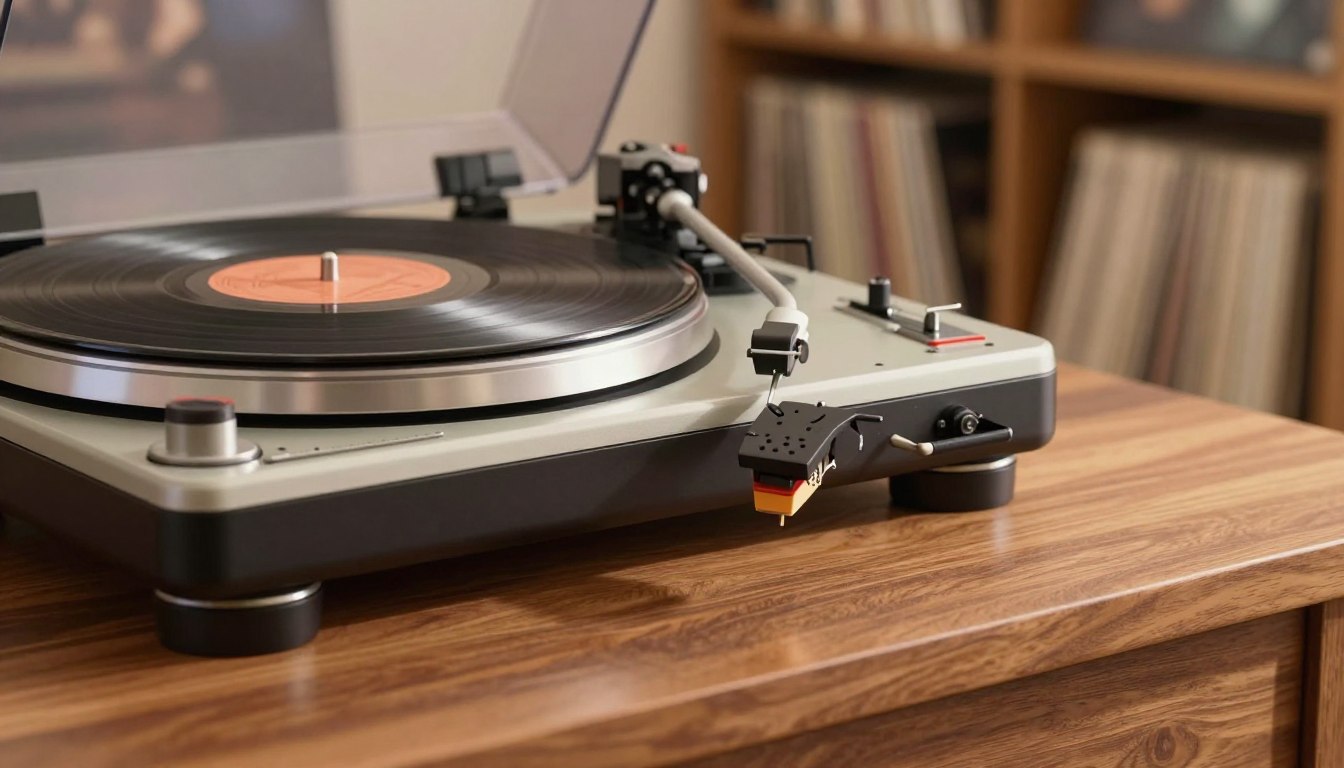
A detailed illustration of record player components arranged on a polished wooden table. In the foreground, focus on a close-up of the stylus and tonearm, showcasing their intricate mechanics and sleek design. In the middle ground, include a vintage turntable with a shiny platter and controls, emphasizing its craftsmanship. The background features blurred shelves stocked with vinyl records, creating a nostalgic atmosphere. Soft, warm lighting illuminates the scene, casting gentle shadows that enhance the textures of the materials. Use a shallow depth of field to draw attention to the components while creating a professional, inviting mood, suitable for readers exploring technical specifications. Ensure the image is clear, vibrant, and free of any text or branding.
Safety Certifications and Regulatory Compliance
Make sure to mention any safety certifications you need, like UL (Underwriters Laboratories) or CE (Conformité Européene). Also, say if it needs to follow regulatory standards like RoHS (Restriction of Hazardous Substances).
Following these standards is important. It makes sure the product is safe and legal in your market.
Structuring Your Pricing and Terms Section Effectively
To find the best record player, it's key to know how to set up your RFQ's pricing and terms section. This part is crucial because it affects your budget and cash flow. A good pricing and terms section helps you get accurate quotes from suppliers.
When you're setting this section up, there are important things to think about. First, make sure you ask the right questions to potential suppliers. Break down the record player into parts and their costs.
Request Itemized Pricing Breakdown
Getting a detailed pricing breakdown is essential for comparing quotes. It lets you see the costs of each part and find ways to save money. For example, ask for the cost of the turntable, tonearm, cartridge, and more.
Component | Supplier A | Supplier B |
Turntable | $100 | $120 |
Tonearm | $50 | $60 |
Cartridge | $30 | $40 |
Total | $180 | $220 |
A procurement expert says, "A detailed pricing breakdown lets you compare suppliers and negotiate better deals."
"The key to successful procurement is transparency in pricing. Suppliers appreciate when you clearly outline what you're looking for, and it makes the process smoother for both parties."
Specify Payment Terms and Conditions
It's important to clearly state your payment terms and conditions to avoid misunderstandings. Include details like payment method, schedule, and late payment penalties. Being clear about payment terms helps build trust and makes the process smoother.
For instance, you might say you need a 30-day payment term with a 2% discount for early payment. This lets suppliers know what to expect and can help you get better prices.
Address Shipping and Import Costs
Shipping and import costs can greatly affect your total cost. Make sure suppliers include these costs in their quotes or provide a detailed breakdown. This way, you can avoid surprises and compare quotes fairly.
Talking about shipping and import costs upfront helps you plan your budget better. It ensures you're comparing quotes fairly and avoids unexpected expenses.
Communicating Timeline Expectations That Get Responses
It's important to clearly share your timeline expectations when asking for quotes on record players. This way, suppliers can give you quotes that fit your needs. They'll know exactly what you're looking for and when.
Being clear about your timeline helps manage the buying process better. It makes sure you and the suppliers are in sync about when things need to happen.
Set Clear RFQ Response Deadlines
Setting a specific deadline for RFQ responses is key. It lets suppliers focus on your request and ensures you get quotes when you need them.
Think about how complex your request is and the time of year. Also, consider how long it usually takes for similar requests in your field to get a response.
Outline Sample and Production Timelines
It's also important to share the timelines for samples and production. This helps suppliers understand your project's full schedule and plan better.
Include important dates like when to submit samples, start production, and when to deliver. Being clear about these details can help you get more accurate and timely quotes.
Timeline Component | Description | Expected Date |
RFQ Response Deadline | Last date for suppliers to submit their quotes | 2024-09-25 |
Sample Submission | Date by which samples should be submitted for evaluation | 2024-10-05 |
Production Start Date | Date when production is expected to commence | 2024-10-15 |
By sharing your timeline clearly and in detail, you can make the RFQ process smoother. This increases the chances of getting timely and relevant responses from suppliers.
Mistakes That Delay Your Record Player RFQ Responses
To speed up your search for record players, it's key to avoid common mistakes in RFQs. A well-written RFQ helps you get accurate quotes from suppliers. It also makes the whole buying process smoother.
When you're writing an RFQ for record players, watch out for several pitfalls. Knowing these mistakes can help you get quick and relevant responses from suppliers.
Providing Insufficient Technical Specifications
One big delay in the RFQ process is insufficient technical specifications. Suppliers need clear details about what you need to give accurate quotes.
To fix this, make sure your RFQ has all the technical details. Include things like dimensions, materials, and how the record player should perform. This helps suppliers understand what you need and gives them a chance to quote correctly.
Omitting Critical Business Information
Not including important business info can also slow down the RFQ process. Suppliers need to know about your business to give a quote that fits your needs.
Share your company's background, the project's context, and how many you plan to order. This lets suppliers see if they can meet your request and quote accurately.
Setting Unrealistic Expectations
Setting expectations that are too high is another mistake that can slow down RFQ responses. Suppliers are less likely to respond if your timeline or budget is unrealistic.
To avoid this, set realistic deadlines and budget ranges based on what the market and industry standards suggest. This will attract more relevant and timely responses from suppliers.
Sending to the Wrong Suppliers
Lastly, sending your RFQ to the wrong suppliers can really slow things down. It's important to target suppliers who can actually meet your needs.
Do your research and make sure the suppliers you choose have a history of delivering similar products. This focused approach will lead to better and faster responses.
Conclusion
We've covered the key steps to make a great record player RFQ. A well-written RFQ is vital in the procurement process. It affects the quality and speed of the quotes you get.
By making your needs clear and including all important details, you create a strong RFQ. This helps suppliers give you precise quotes.
To make your procurement process better, use the tips from this article. This way, you can get faster and more accurate quotes from suppliers.
A good RFQ is the start of a successful procurement journey. Follow these tips to make sure your audio equipment RFQ is effective and efficient.
FAQ
Why does a clear RFQ help us get faster responses from turntable manufacturers?
A detailed Request for Quote (RFQ) cuts down on back-and-forth emails. This speeds up the process. By being clear about our needs, suppliers like Hanpin Electron or Skywin can quickly check if they can meet our requirements. This leads to faster and more accurate pricing.
What specific technical details should we include to ensure high-quality audio output?
To get a quote that meets our quality standards, we need to be specific. We should mention if we want a belt-drive for better sound or a direct-drive for more power. We also need to specify the phono preamp, stylus brand, and connectivity options like Bluetooth 5.0.
How do we determine the right order volume and budget range to present to suppliers?
We should look at current market prices on Amazon or Target to set our budget. Knowing our Minimum Order Quantity (MOQ) and budget helps us present clear figures to suppliers. This makes it easier for them to plan their production and materials.
Why is it important for us to ask for an itemized pricing breakdown?
Getting an itemized list helps us understand how our budget is spent. It shows us the cost of materials, labor, packaging, and safety certifications. This way, we can make smart choices about where to save or invest in quality.
What timeline expectations are realistic for a professional record player production run?
Every factory is different, but we should plan for lead times. A clear RFQ deadline of ten to fourteen days is a good start. Then, allow at least 30 days for prototyping and sampling. This keeps our project on track with industry leaders.
What are the most common mistakes we should avoid when sending out our RFQ?
Common mistakes include vague specs or missing Incoterms. We should also avoid unrealistic delivery dates and send our RFQ to the right suppliers. This ensures we get accurate quotes from the right manufacturers.
Should we include specific materials and finish requirements in our initial request?
Yes, including specific materials and finishes is crucial. Choices like wood veneer or acrylic platters affect cost and sound quality. By specifying these details, we ensure the quotes match our intended product quality.
Contact
Leave your information and we will contact you.